
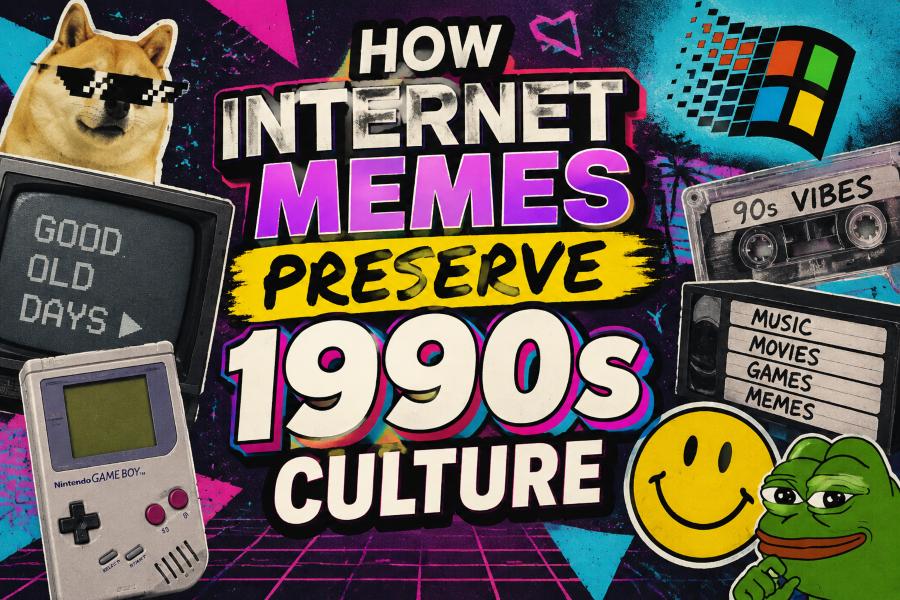
How do internet memes preserve 1990s culture? They turn familiar images, catchphrases, songs, and television moments into shareable references that remain visible long after their original release. A single post can revive a dial-up joke, a sitcom reaction, or a beloved game character for people who were not alive during the decade.
Memes work like informal digital scrapbooks. They strip cultural artifacts down to memorable details, then give those details new captions and contexts. This makes 1990s references easy to recognize, remix, and pass along across social platforms.
The process is not simply nostalgia for older audiences. Younger users often discover the decade through meme formats, viral clips, and reposted advertisements. They may first encounter Tamagotchis, VHS tapes, or teen movies as jokes before exploring their original cultural meaning.
By combining memory with humor, memes keep the 1990s active in everyday online conversation. They preserve the decade as a living collection of shared symbols rather than a closed chapter in pop-culture history.
Internet memes preserve cultural memory because they make old material immediately usable. Instead of requiring someone to watch an entire television series, a meme can communicate its mood through one recognizable screenshot.
Many 1990s memes rely on visual shortcuts. Neon fashion, chunky computers, cassette tapes, and video-store aisles quickly signal a particular era, even when the post discusses a modern situation.
Repeated sharing also creates a public archive. Users repost old commercials, magazine covers, music videos, and celebrity interviews that might otherwise remain buried in personal collections or media libraries.
Remixing gives those artifacts fresh relevance. A line from a 1990s film can become a reaction to workplace stress, dating apps, or current events without losing its original association.
This ongoing reuse keeps cultural details in circulation. It also encourages people to compare their own memories, correct inaccuracies, and add context about what life in the 1990s actually felt like.
Why Do Memes Keep 1990s Culture Alive?
Instant Recognition
Memes rely on familiar signals, and the 1990s supplied many of them. A Friends screenshot, a Super Nintendo controller, or a Windows startup sound can trigger recognition in seconds. That speed helps older cultural references compete in fast-moving feeds where attention is limited.
Shared Nostalgia
People who grew up in the decade often use memes to reconnect with ordinary experiences, such as recording songs from the radio or waiting for a webpage to load. The humor comes from recognition, but the exchange also validates memories that might otherwise seem too small to matter.
A Gateway for New Audiences
Younger users encounter 1990s culture through posts that explain or parody it. A meme about rewinding a VHS tape may prompt curiosity about home entertainment before streaming. In this way, humor becomes an entry point to older technology, media, and social habits.
Reusable Pop-Culture Images
The decade produced highly visual films, television shows, toys, and music videos that translate well into meme templates. Expressive characters and distinctive scenes provide emotional shorthand, allowing users to attach new meanings while keeping the source material recognizable.
Community Memory Building
Comment sections often expand a meme into a group memory exercise. One person identifies a forgotten snack, another recalls a school ritual, and someone else shares regional context. Together, those responses preserve details that official histories may overlook.
Revival Through Remixing
Memes rarely preserve culture in a museum-like form. They alter captions, combine references, and apply 1990s imagery to present-day problems. That flexibility gives older material a new purpose, helping it feel current instead of merely historical.
Digital Cultural Archives
Collections of memes, clips, and fan posts can function as searchable archives of popular memory. Although they are incomplete and sometimes inaccurate, they record which 1990s objects, phrases, and emotions continue to matter to online communities.
Five Ways Memes Refresh 1990s Nostalgia
1. Memes turn everyday 1990s objects, such as pagers and disposable cameras, into symbols that people can recognize without lengthy explanations.
2. They reconnect iconic television, film, and music moments to modern emotions, making older media useful in current conversations.
3. They invite users to share personal stories that add lived experience to broad pop-culture references.
4. They expose younger audiences to the decade through humorous formats that feel native to social media.
5. They keep forgotten products, slang, and routines visible by repeatedly placing them in new digital contexts.
Key 1990s References That Thrive Online
- Sitcom reactions: Expressive scenes from 1990s sitcoms give users ready-made ways to show disbelief, excitement, embarrassment, or frustration.
- Early internet humor: Dial-up sounds, clunky websites, and chat-room memories highlight how different online life felt before constant mobile access.
- Gaming icons: Characters and consoles from the era remain popular because they connect childhood play with recognizable visual design.
- Music-video style: Boy bands, grunge imagery, and colorful pop aesthetics provide instantly identifiable material for parody and celebration.
- School memories: Memes about book fairs, lunchroom trends, and classroom technology preserve the routines that shaped many childhoods.
- Consumer products: References to snacks, toys, and video rentals capture the everyday marketplace of the decade in a compact form.
- Fashion callbacks: Plaid shirts, platform shoes, and oversized denim help memes visually recreate the decade while commenting on returning trends.
How Memes Shape the Memory of the 1990s
They Simplify Complex Eras
Memes condense a decade into a few powerful images and jokes. This makes cultural memory accessible, but it can also reduce a diverse period to a narrow set of trends. Readers should recognize that viral nostalgia is selective rather than complete history.
They Preserve Everyday Technology
Old devices are especially suited to meme culture because their limitations are easy to joke about. Posts about floppy disks, landline phones, and portable CD players document how people communicated and entertained themselves before smartphones became standard.
They Reframe Childhood Experience
For many users, 1990s memes focus on childhood rules, after-school television, and family routines. These posts transform private memories into collective ones, allowing people to see that their small experiences were shared by a wider generation.
They Influence Trend Cycles
Viral references can accelerate the return of 1990s fashion, music, and design. When a meme makes an old style look playful or desirable, brands and creators may adapt it for new audiences. Cultural preservation then affects real consumer behavior.
They Encourage Source Discovery
A successful meme can send viewers back to its original source. Users may seek out a film, album, game, or television episode after seeing a clipped scene online. This creates renewed interest in works that might have faded from mainstream attention.
They Require Context Checks
Not every viral reference accurately represents the 1990s. Captions can misdate events, exaggerate common experiences, or remove important context. Comparing memes with reliable sources helps audiences enjoy nostalgia without confusing it with a complete record.
They Keep Cultural Conversation Active
The strongest preservation effect comes from participation. Each repost, remake, and response asks people to interpret the decade again. Rather than storing the 1990s in a static archive, memes keep its media, values, and contradictions open to discussion.
Internet memes preserve 1990s culture by making old references quick, funny, and socially useful. They transform media clips, technology, fashion, and ordinary routines into shared language for online communities.
Their value lies in participation. People do not just view a meme; they add captions, memories, corrections, and new interpretations that expand its cultural meaning.
At the same time, memes offer a selective view of the decade. They spotlight memorable trends and emotional touchstones, so audiences should balance nostalgia with wider historical context.
Even so, memes ensure that the 1990s remain discoverable. They connect people across generations and keep the decade’s cultural fingerprints visible in the digital present.
FAQs About how do internet memes preserve 1990s culture?
How do internet memes preserve 1990s culture?
Internet memes preserve 1990s culture by repeatedly sharing and remixing its images, quotes, products, music, and routines. This keeps recognizable references in public conversation and introduces them to new audiences.
Why are 1990s memes so popular?
They combine strong visual identity with nostalgia. Many people remember the decade’s media and technology personally, while younger users enjoy its distinctive style and unfamiliar pre-smartphone experiences.
Can memes teach people about the 1990s?
Yes, memes can spark interest in 1990s culture and lead people to original films, games, songs, and news stories. However, they should be treated as starting points, because humor often leaves out context.
What types of 1990s content become memes?
Popular sources include sitcom scenes, teen films, music videos, video games, toy advertisements, early internet experiences, fashion trends, and obsolete technology such as VHS tapes and dial-up modems.
Do memes preserve accurate cultural history?
Memes preserve pieces of cultural memory, but they are not always historically precise. They often exaggerate, simplify, or focus on the experiences of certain groups, so additional sources are useful for a fuller picture.
How do memes connect generations?
Older users can share firsthand memories behind a reference, while younger users can discover and reinterpret it. That exchange turns a 1990s artifact into a conversation rather than a private memory.